
English| EUR
Suggested for you
More currencies
Choose a language
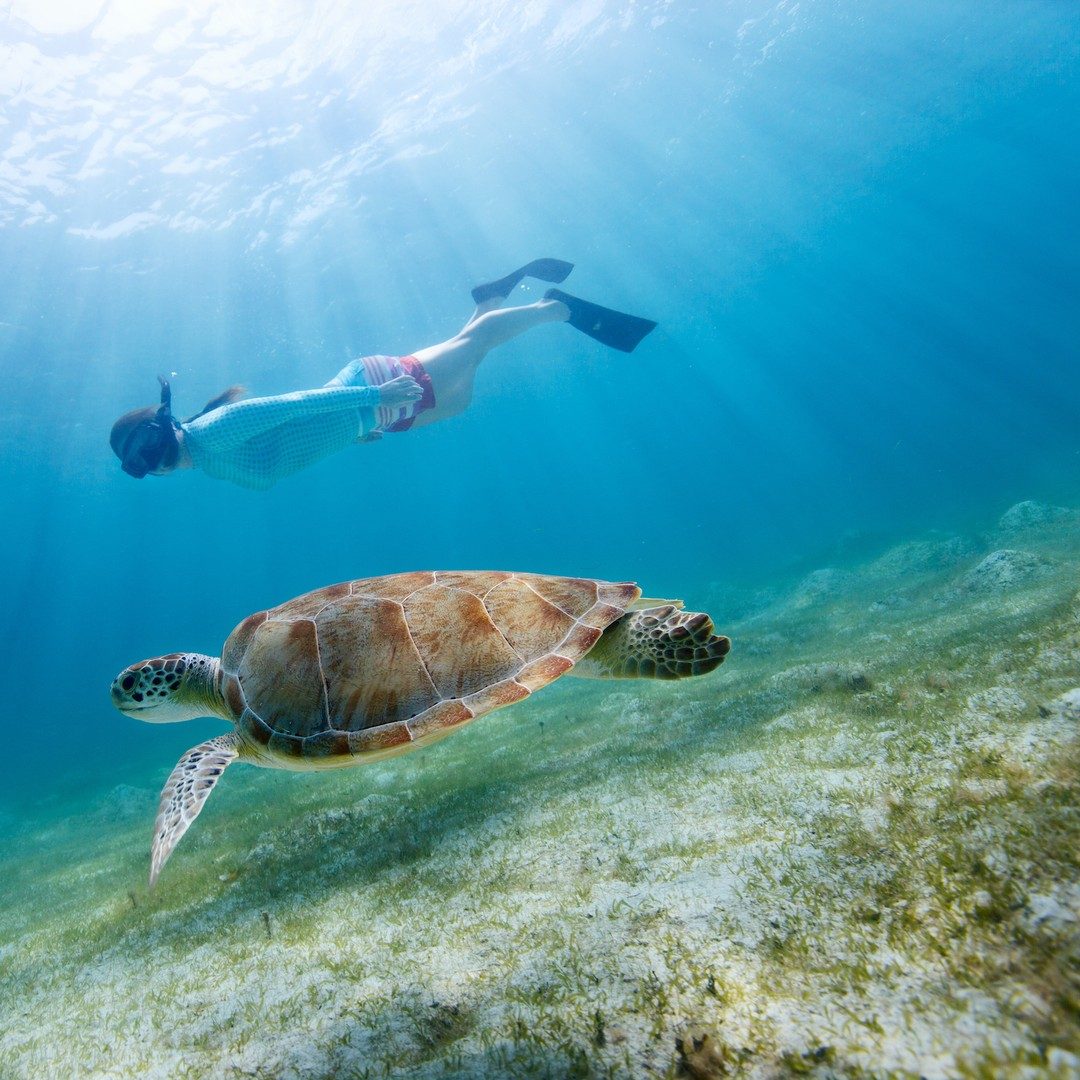
Fort Walton Beach sits on a stretch of the Emerald Coast where Gulf currents meet nearshore rock formations and artificial reefs, creating habitat for tropical fish, rays, and seasonal sea turtles. The public beach parks offer free shore access to snorkeling zones within swimming distance, and water clarity shifts hour by hour with tide and wind. This guide identifies the productive sites, the species you'll encounter, and the conditions that separate a clear day from a cloudy one.
Quick answer
The best snorkeling in fort walton beach florida centers on John C. Beasley Park and the Okaloosa Island Pier jetties, where rock outcroppings and submerged structure attract sergeant majors, blue tangs, Gulf flounder, and Atlantic stingrays year-round. Visibility averages 10 to 20 feet on calm mornings but drops after午后 wind or recent rainfall. Free entry to public beach parks makes shore-based snorkeling accessible without boat charters or tour fees.
Fort Walton Beach occupies a narrow barrier island where the Choctawhatchee Bay empties into the Gulf of Mexico, and that mixing zone creates nutrient flow that supports reef fish populations within a few hundred feet of shore. The jetties flanking Okaloosa Island Pier extend roughly 300 feet into the Gulf and act as vertical breakwaters colonized by barnacles, oysters, and small crabs—precisely the forage base that draws snappers, sheepshead, and juvenile grouper into snorkeling depth. John C. Beasley Park anchors the public snorkeling corridor along Miracle Strip Parkway. The shoreline consists of white quartz sand sloping gradually into water that reaches eight to ten feet deep at the sandbar, then drops to fifteen feet beyond the break. Rock ledges and scattered limestone rubble lie parallel to the beach in that outer zone, and the crevices shelter spadefish, pinfish, and small lobsters during daylight hours. Snorkelers swimming perpendicular to shore cover the distance in five to seven minutes of steady finning. The water column itself hosts needlefish near the surface and sand dollars on the bottom, with occasional sightings of cownose rays migrating through in spring and fall. Visibility depends less on season than on wind direction and tidal exchange. Offshore winds out of the north or northeast push surface chop away from the beach and allow the water to settle into clarity that can reach 25 feet on exceptional days. Onshore southerly winds stir sediment and plankton, cutting visibility to under ten feet even in summer. The Choctawhatchee Bay flushes tannin-stained freshwater into the nearshore Gulf after heavy rain, creating a temporary brown lens that clears within 48 hours. Checking wind forecasts and tide charts the night before a snorkel outing eliminates most visibility disappointments. Marine life diversity peaks from May through October when water temperatures climb above 78 degrees and species like Spanish mackerel, juvenile tarpon, and sergeant majors move into the shallows. Winter snorkeling remains viable with a wetsuit, and the cooler months bring schools of mullet that attract predatory fish to the jetties. Fort Walton Beach snorkeling spots for experienced swimmers include the rock piles east of the pier and the artificial reef balls deployed 400 yards offshore, though those sites lie beyond comfortable shore-swim range for most visitors and require kayak or paddleboard transport.
“Rock ledges parallel to the beach shelter spadefish and small lobsters in crevices that remain accessible to snorkelers finning just beyond the sandbar.”
The best arrival window for snorkeling in Fort Walton Beach is 07:00–10:00 to ensure clearer water, calmer conditions, and easier parking. Planning your visit during these morning hours minimizes exposure to peak crowds and afternoon wind chop.
Warm water, 75°F–85°F
Expect heavy beach traffic and warmer water temperatures during these peak summer months. Plan to arrive early to secure space at public access points.
Cooler water, 60°F–70°F
Water clarity often improves during these months due to lower humidity and reduced storm activity. Wetsuits may be necessary for extended time in the water.
—
Visiting on weekdays provides the most space for equipment setup and lower density in the water. This period offers the most consistent conditions for visibility.
Verdict: For the best conditions, aim for weekday mornings during May or October, arriving between 07:00 and 10:00.
Public beach parks providing access to snorkeling areas in Fort Walton Beach are open to the public daily. Visitors may access these locations at any time throughout the week.
Access to public snorkeling areas in Fort Walton Beach is provided through public beach parks. There are no entrance fees required to access these locations.
Verdict: A typical adult pays 0 USD for park entry, as all public beach access points remain free of charge.
John C. Beasley Park is located on Okaloosa Island in Fort Walton Beach. The most direct approach is via Miracle Strip Pkwy SE.
Follow US-98/Miracle Strip Pkwy SE to 1550 Miracle Strip Pkwy SE
Request drop-off at John C. Beasley Park
Aim to arrive between 07:00–10:00 to secure parking before peak crowds and take advantage of calmer conditions.
Pack the right gear and plan your timing to make the most of Fort Walton Beach's clear Gulf waters.
Everything you need to know about best snorkeling in fort walton beach florida
John C. Beasley Park is widely recognized for offering the best snorkeling in Fort Walton Beach Florida due to its accessible coastal waters and marine life. You can explore the shallow areas where local fish populations gather near the shoreline.
The best arrival window is between 07:00 and 10:00 to ensure clearer water and calmer conditions. Visiting during these hours also helps you avoid peak crowds and secures easier parking at the site.
There is a 0 USD entrance fee as this location provides free entry to public beach parks. You do not need to purchase a ticket to enjoy the natural beauty of the area.
Yes, families often enjoy the shallow, calm waters at this location. Always ensure children wear appropriate flotation devices and remain under adult supervision when exploring the beach.
You should bring your own mask, snorkel, and fins to make the most of your excursion. It is also recommended to pack sunscreen, towels, and plenty of water for your time at the coast.
Yes, the park provides essential amenities to support visitors during their stay. These facilities make it convenient to spend several hours enjoying the sand and sea.
The park is located at 1550 Miracle Strip Pkwy SE, Fort Walton Beach, FL 32548. You can easily navigate to this address using standard GPS or map services.
Snorkeling Tours in Fort Walton Beach
Read more GuideWhere to Snorkel in Fort Walton Beach
Read more GuideCan You Snorkel at Fort Walton Beach
Read more GuideShark Safety in Fort Walton Beach
Read more GuideDive Shops in Fort Walton Beach
Read more Tickets & toursScuba Diving in Fort Walton Beach
Read more